


My first real Micro Four Thirds experience started with a pretty simple prejudice: the sensor is smaller than APS-C and significantly smaller than full frame, so surely that difference must also be clearly visible in my images. Less dynamic range, fewer options for subject separation and problems appearing sooner as the light gets worse. Of course, the technical differences between sensor formats are real, but for years I had drawn a conclusion from them that I had never really tested for myself. It was only after spending more time with the OM System PEN that I realized how little some of these points actually matter in my photography.
The moment when that became particularly obvious was, of all things, a morning when I had not planned to go out and take photos at all. I was on my way to the office, with the PEN and a couple of small MFT lenses already in my backpack, and really only needed to catch the bus. Where I live in the countryside, turning right takes me to the bus stop, while turning left takes me out towards fields, woodland and a small lake. That morning, however, there was so much fog hanging over the fields, with sunrise already beginning to show on the horizon, that I spontaneously chose left. A few hours later, my view of Micro Four Thirds had changed quite a bit.
Transparency: I tried the OM System PEN as part of my work at Calumet. This article is not a paid collaboration with OM System. The Calumet link in this article is an affiliate link.
* Affiliate link: If you make a purchase, I receive a commission. The price stays the same for you.
Why I was skeptical about Micro Four Thirds for so long
For a long time, Micro Four Thirds was a fairly big blind spot for me. Of course, I had handled MFT cameras before, played around with them at trade shows or taken a few individual shots. But spending several days with a system like this, photographing different situations and then taking the time to edit the RAW files afterwards is something else entirely. I had never really done that before.
Even so, I had a pretty clear idea of where the limitations would have to be. Privately, I shoot a lot with Fujifilm and am therefore used to APS-C, while professionally I regularly test current full-frame cameras as well. In direct comparison, MFT can quickly feel like the smaller format where you inevitably have to accept compromises. Technically, that is not entirely wrong, because under comparable conditions a larger sensor does offer advantages. My mistake was assuming that these measurable differences would automatically translate into noticeably worse photos. I had never really set out to test that assumption until the PEN ended up with me for a while.
The morning started with hares in the fog
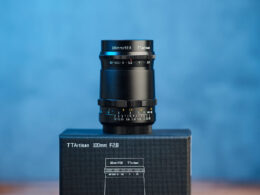
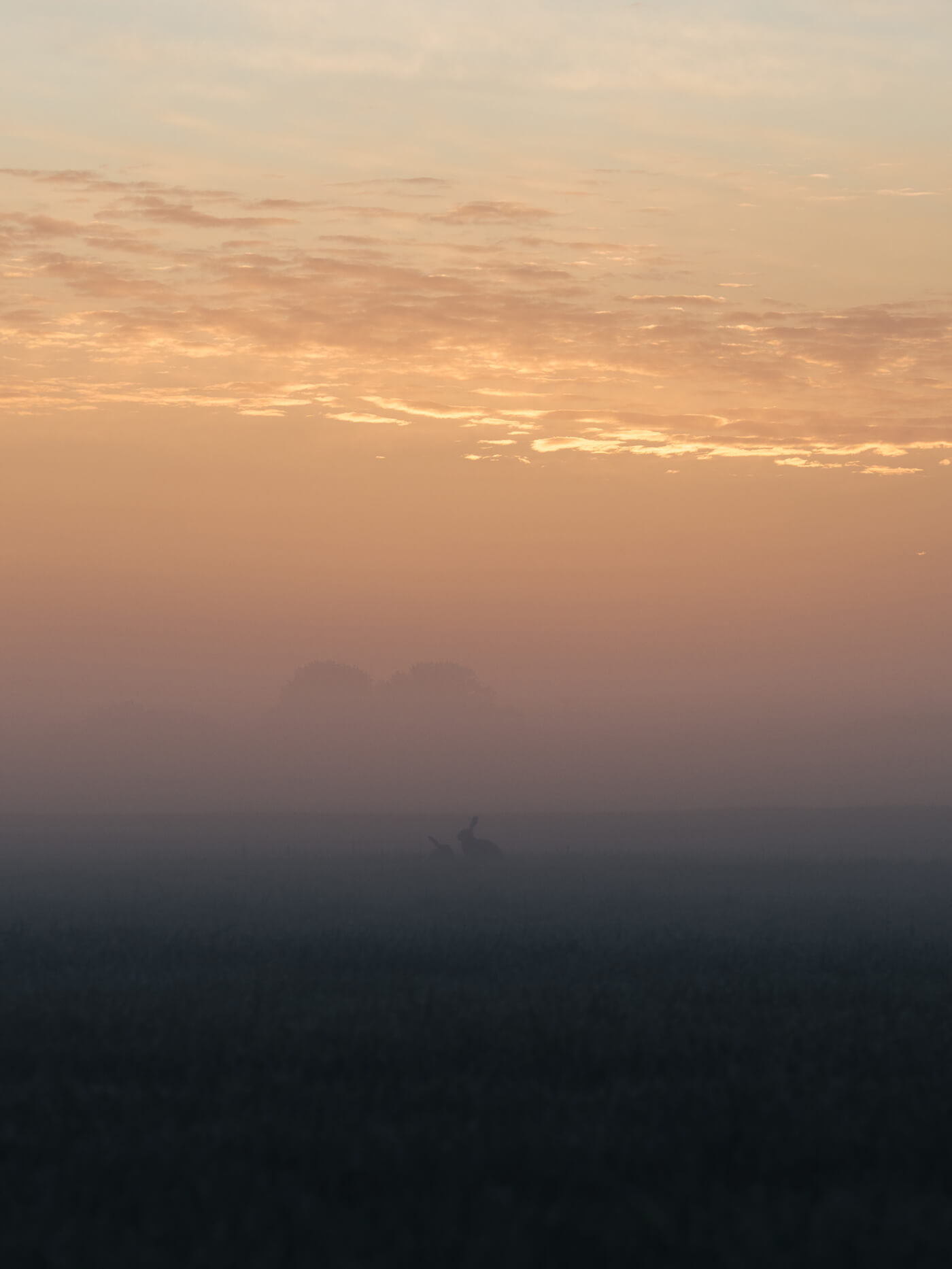
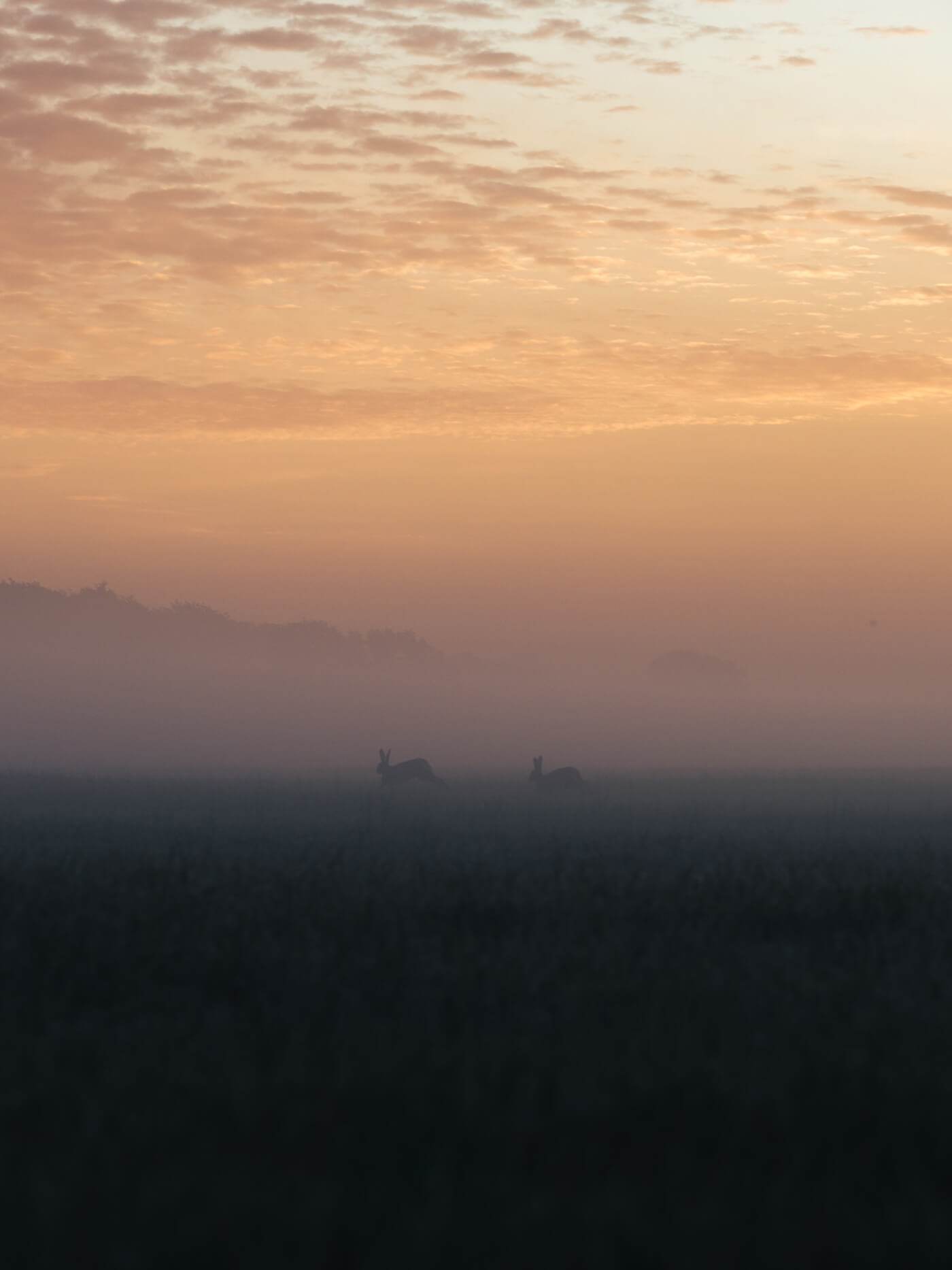
Before the sun had even risen, I spotted a few hares in a field. Through the dense fog they were barely more than dark silhouettes, and my setup that morning was not exactly ideal for classic wildlife photography anyway. The only lens on the PEN was a small 75mm F1.8. On Micro Four Thirds, the angle of view is roughly equivalent to a 150mm lens on full frame, yet the lens itself is remarkably compact.
Of course I would have liked more focal length in that moment, but at the same time that is one of the advantages of the system. The little 75mm was in my backpack, so I was able to take the photos. I probably would not even have packed a much larger telephoto lens on a normal workday. The images did not turn into spectacular wildlife shots because the animals were too far away and the light was too weak, but they captured the atmosphere of that morning very well. That was the first moment when my previous assumptions about MFT started to wobble a little.
I had expected to reach the point much sooner where the camera simply felt like it was hitting its limits. Instead, I looked at the images and simply liked them because they captured the right atmosphere. Suddenly, the question of whether a larger sensor might technically have offered more headroom did not seem particularly important anymore.
Sunrise, fog and the question of dynamic range
Shortly afterwards, the sun slowly came up over the horizon and I continued to a small river. Quite a lot came together that morning: fog was still hanging over the water, the sun was low and the clouds were being lit warmly from below. At the same time, it was exactly the kind of situation that can challenge a sensor. The highlights around the sun were very bright, while parts of the foreground were still deep in shadow.
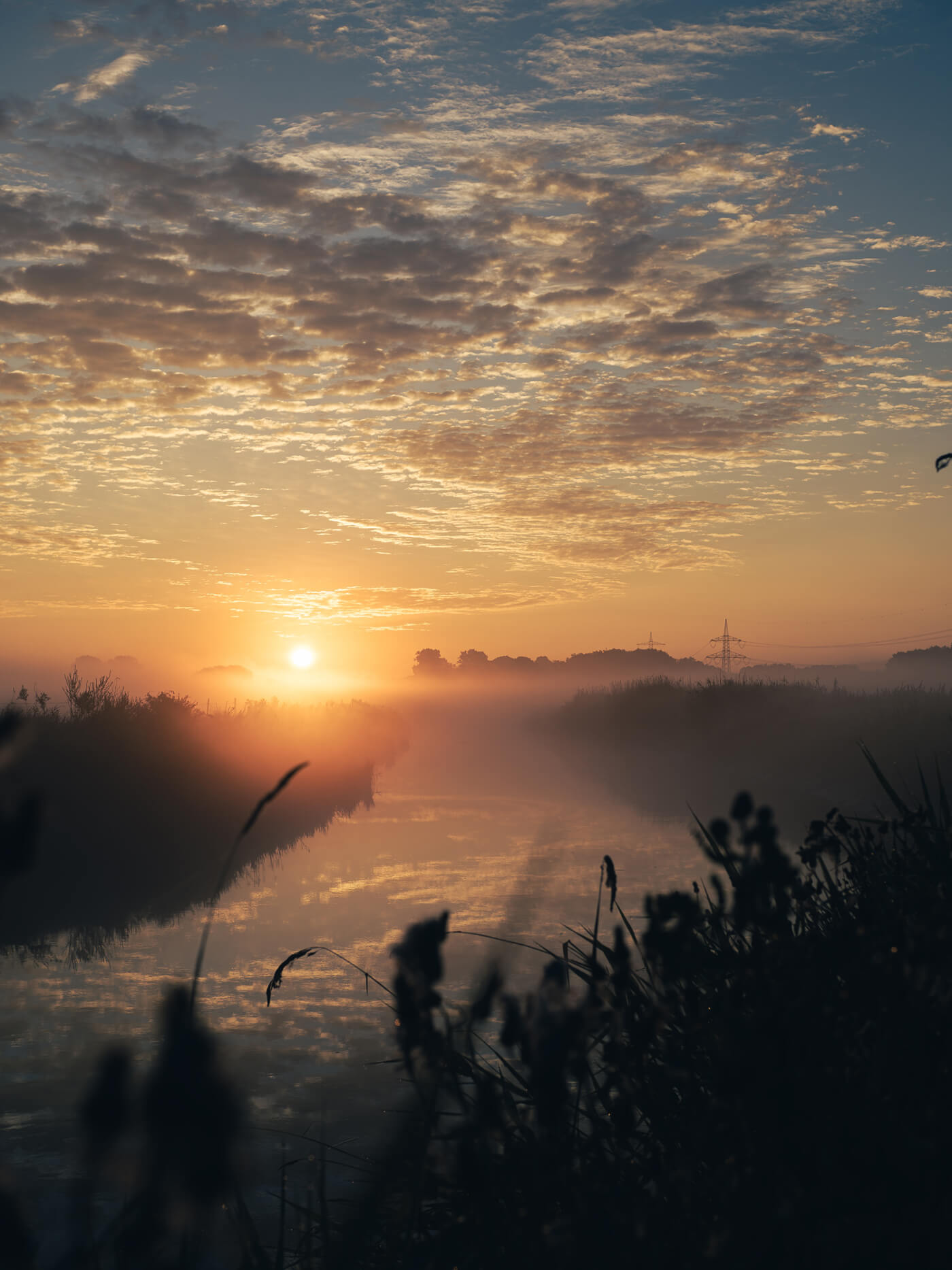
Dynamic range was one of the areas where I had expected much more obvious limitations from Micro Four Thirds. That is why I also tried the PEN’s HDR function there. The camera combines several exposures internally and then gives me a RAW file that I can continue editing. For me, that is one of the more interesting approaches OM System takes: rather than looking at sensor size alone, the system uses computational photography to solve many situations in a practical way.
Of course, that does not mean physical differences can simply be programmed away. Under comparable conditions, a larger sensor can still offer more headroom. In practice, however, what matters much more to me is whether I end up with the photo I wanted to take. With these images, that was clearly the case. When I later sat down at my computer, I certainly did not feel as though I was suddenly working with severely limited files.
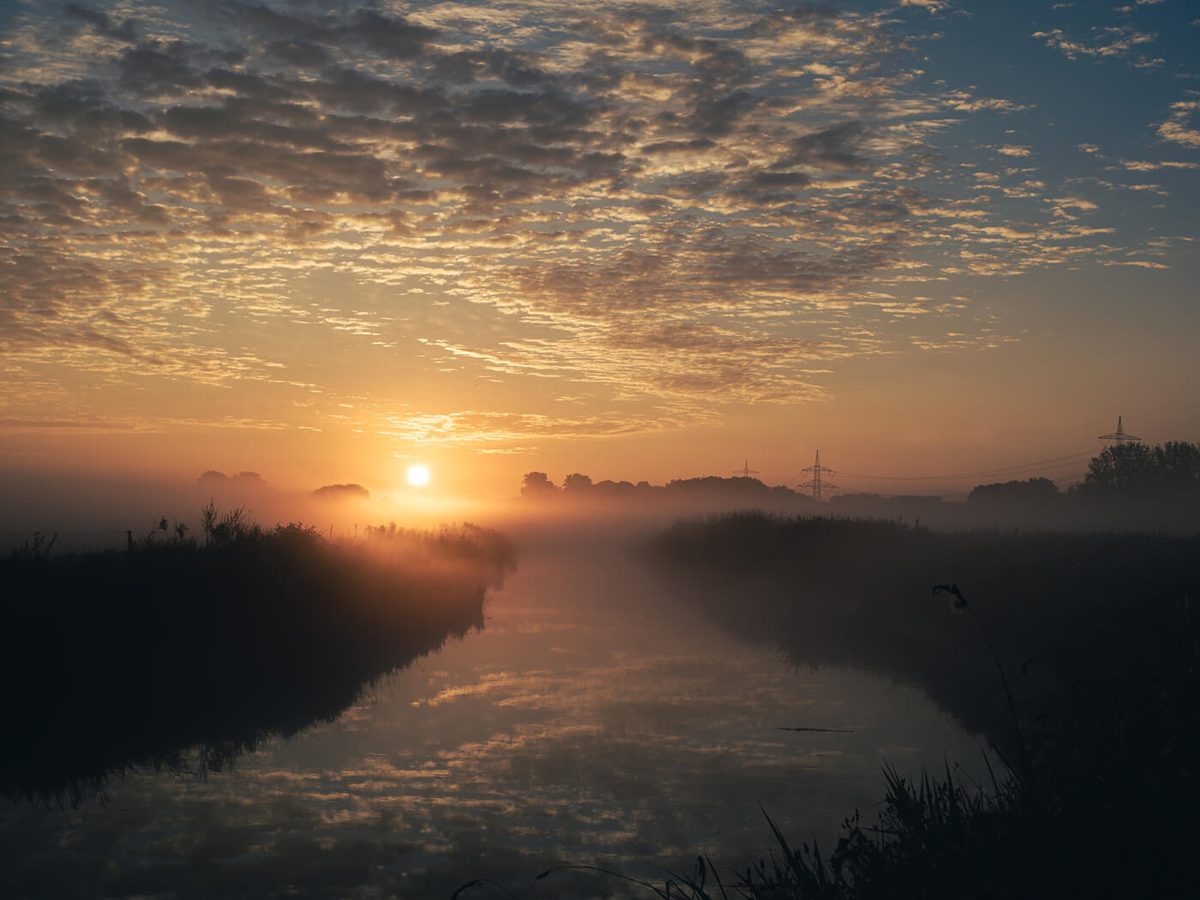
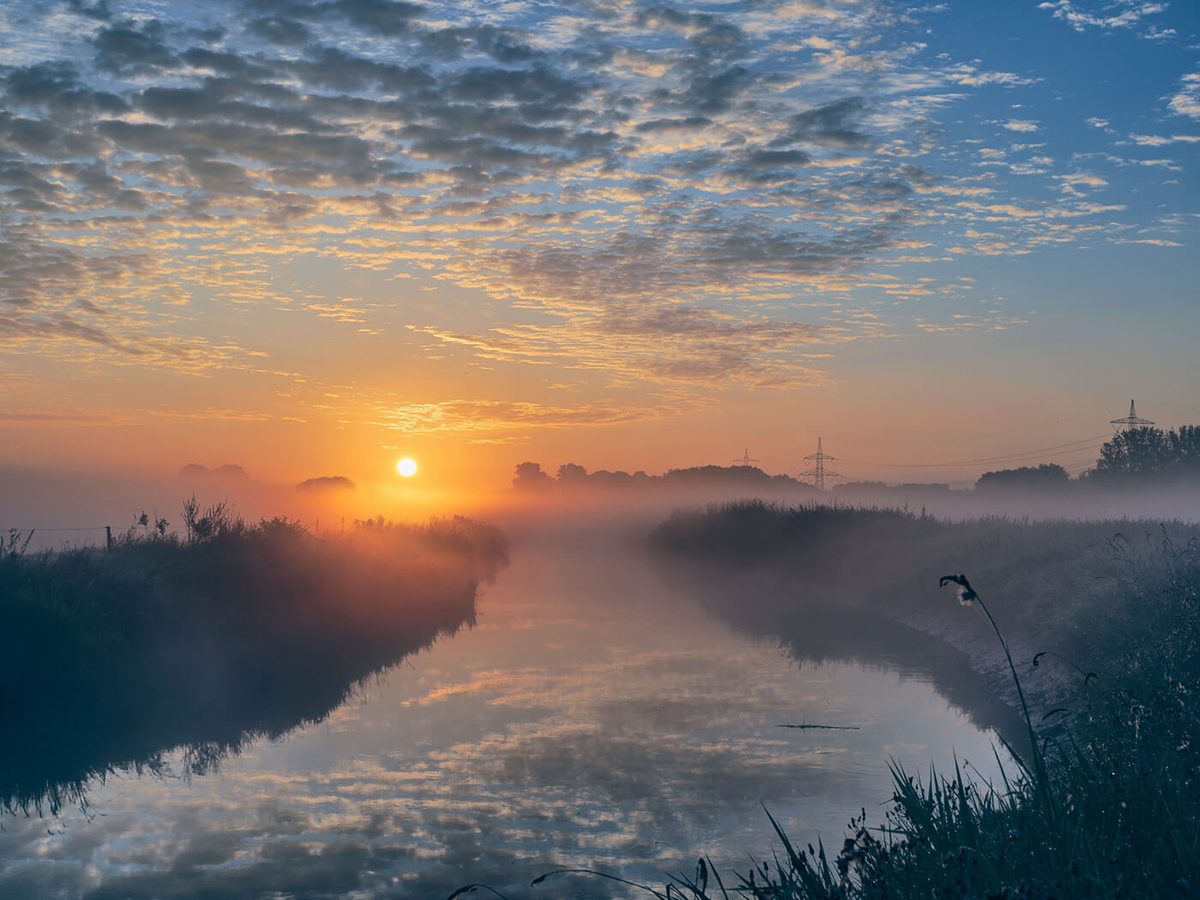
Of course, I could put MFT, APS-C and full frame side by side under identical conditions, lift the shadows by several stops and then look for differences at 100 percent. You would find them pretty quickly. Whether those differences are actually relevant in practice is another question entirely. On this particular morning, they were not.
Can you get good subject separation with MFT?
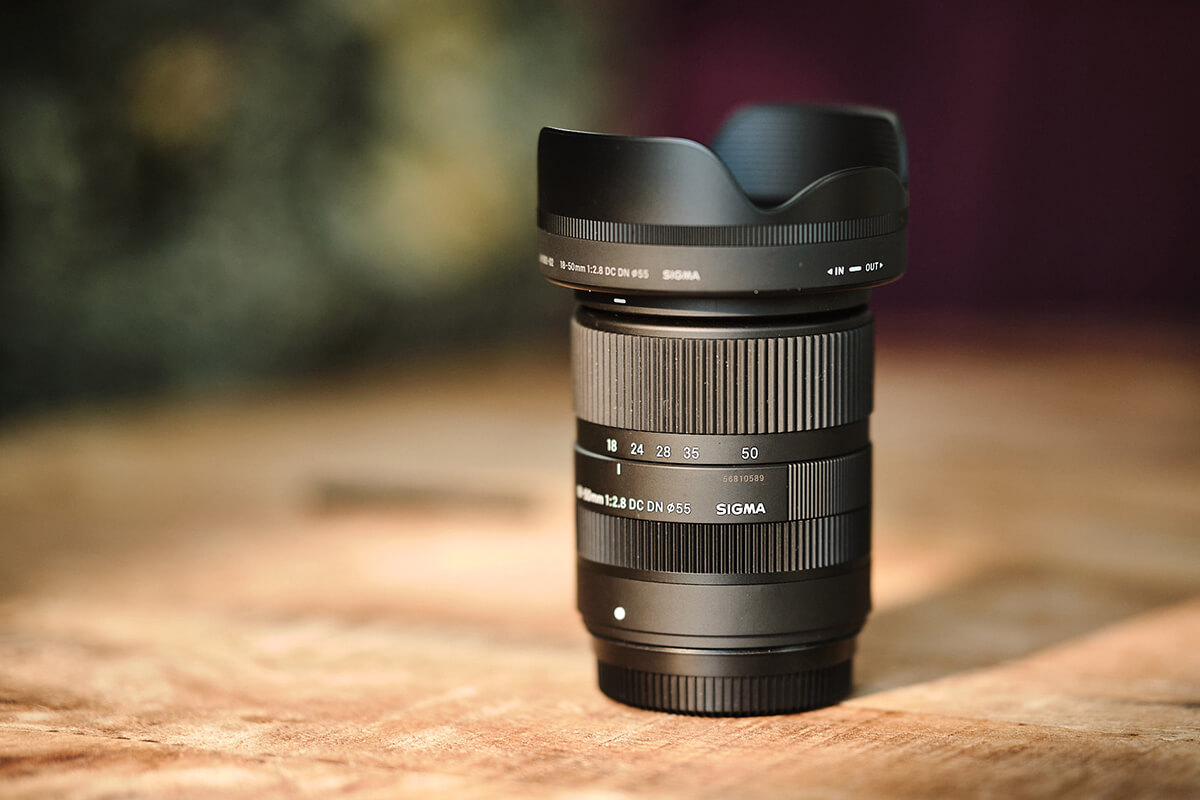
Another one of my prejudices was about subject separation. Later that morning I was mainly using a 25mm F1.8, which gives roughly the classic 50mm angle of view. With the same framing and comparable conditions, a larger sensor can generally produce a shallower depth of field. At some point, however, that had turned into the much broader assumption in my head that you could hardly get decent subject separation with Micro Four Thirds.
The close-up shots around the water and in the woods quickly put that idea to rest. If you are close enough to your subject and the background is far enough away, MFT can still give you very clear separation. I particularly like the result with a leaf on the water, because the background becomes soft enough without the whole image dissolving into blur.


Examples like this show me how quickly technical discussions online can turn into absolute statements. “A larger sensor can give you stronger subject separation” eventually becomes “you cannot get subject separation with MFT.” Those are two very different statements. For the way I photograph, I did not feel like I was missing anything that morning.
Why the small lenses matter more to me than the small sensor
By now, perhaps the most convincing thing about Micro Four Thirds for me is not even the camera itself, but the entire system in front of it. A small body does not help me much if I then have to put a large and heavy lens on the front. With MFT, the lenses themselves can remain genuinely compact as well.
The 75mm F1.8 is a very good example. I get an angle of view roughly equivalent to 150mm on full frame without having to carry a large telephoto lens. The same applies to the 25mm F1.8, which takes up hardly any space in the backpack. That makes a difference on a spontaneous morning like this, because I did not have the gear with me because I had planned a big photography trip. It was simply already in my bag.
That is where size becomes more interesting to me than discussing a few theoretical percentage points of image quality. A camera I actually take with me can be more useful than a technically superior system that stays at home.
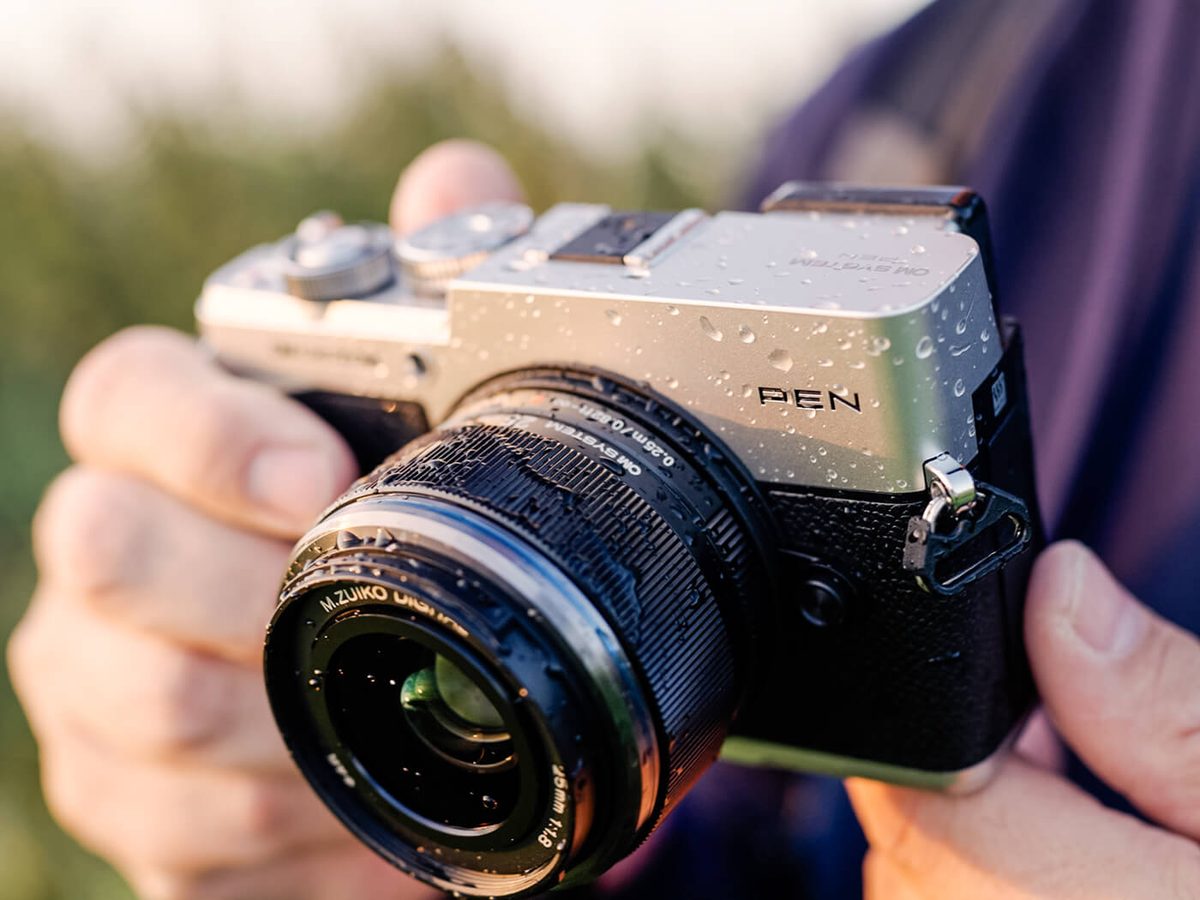
OM System PEN: The camera behind my MFT experience
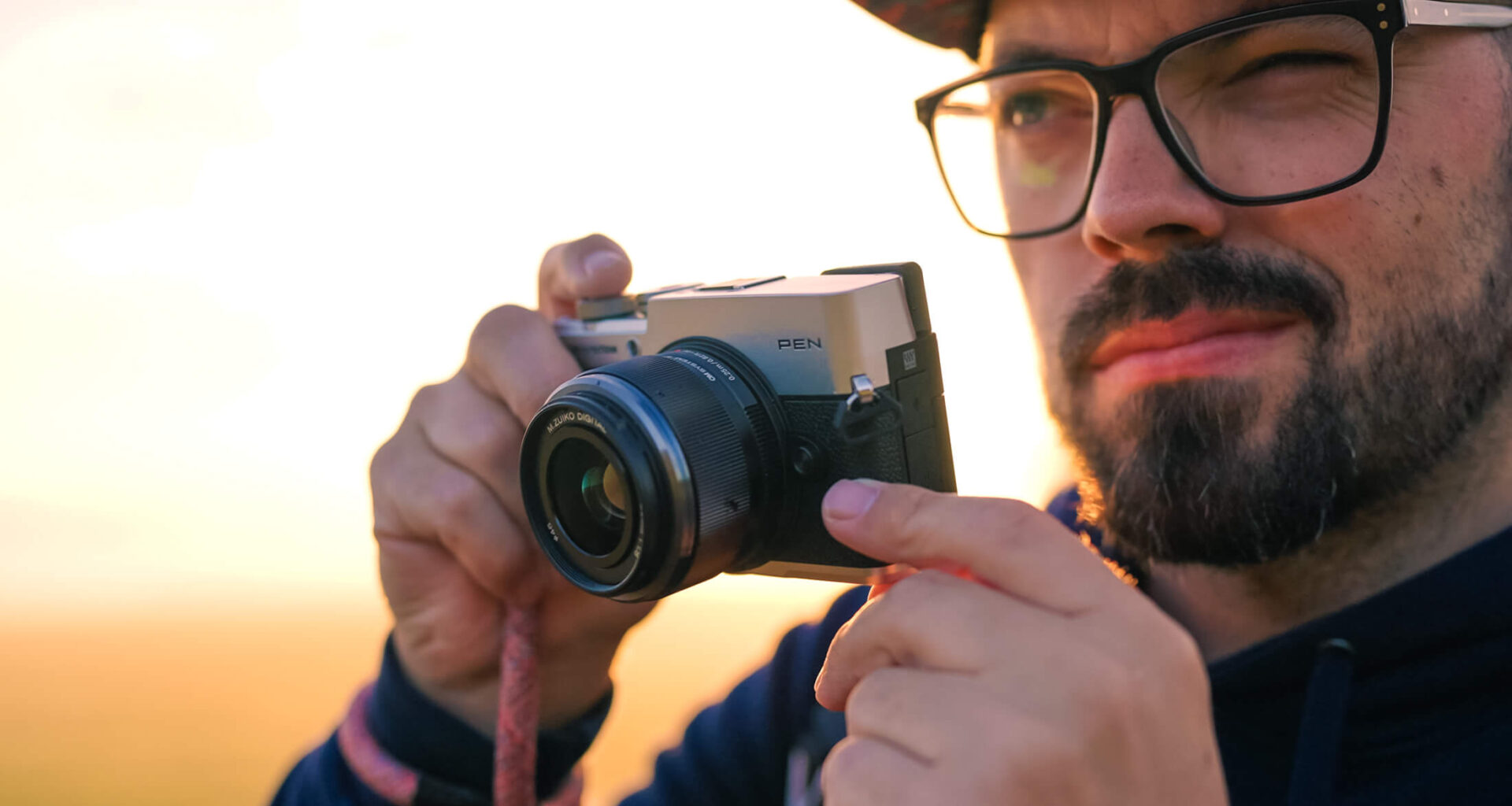
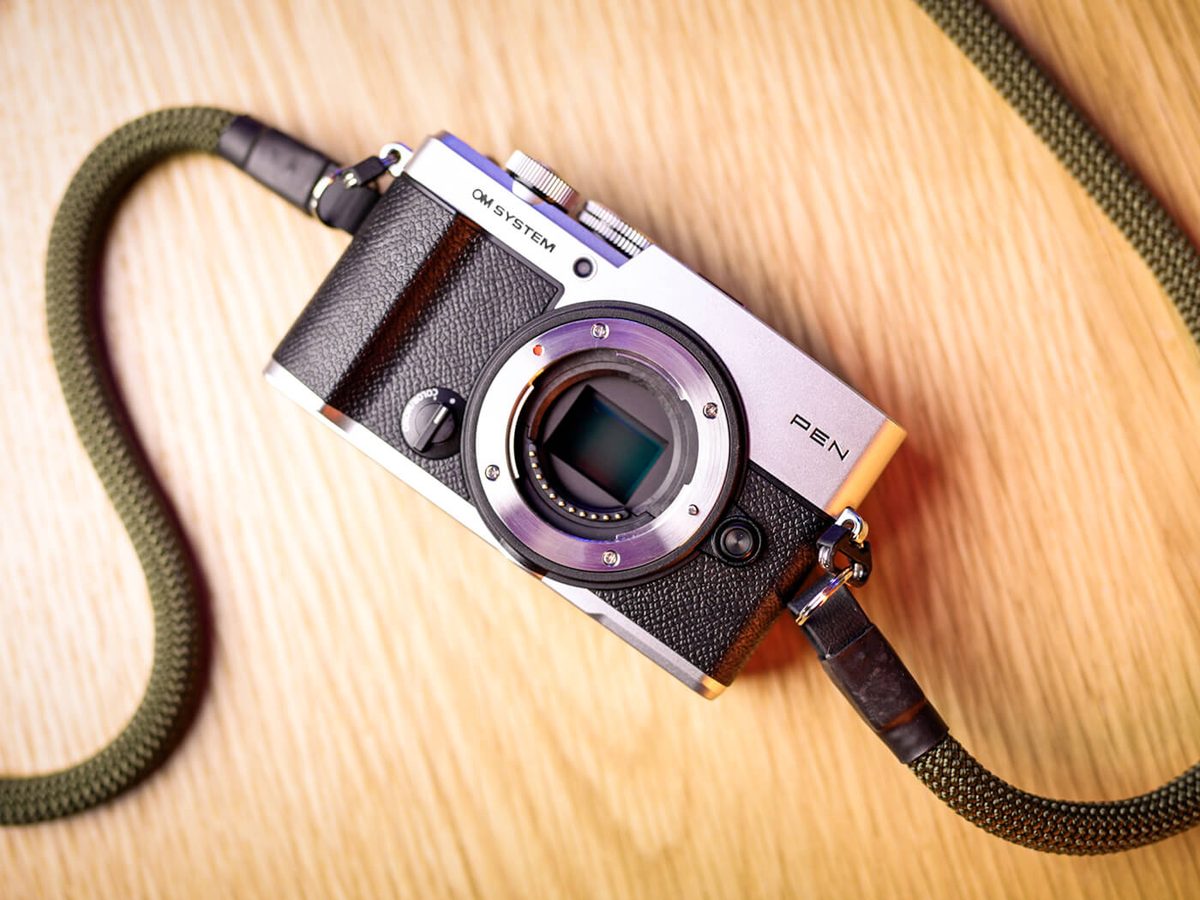
The OM System PEN was the camera that let me spend meaningful time with Micro Four Thirds for the first time. Even so, I deliberately do not want it to become the main subject of this article, because I did not want to turn this into a conventional camera review. What interested me more was how well the combination of a small body, compact lenses and OM System’s typical features works in everyday use.
I find the computational photography features particularly interesting. I had already tried Live ND at the Hamburg funfair, for example, where I could use it to capture the motion of the rides with longer exposures directly in camera. At the North Sea, on the other hand, I simply took the PEN along on a family outing because the whole setup takes up so little space. I was not testing anything there or looking for specific subjects; I was simply using the camera. Situations like that fit the concept very well for me.
I also really like the look of the PEN. I am less enthusiastic about the controls, though, because with such a classic design I would personally also like a somewhat more traditional control concept. My Fujifilm cameras still suit me better in that respect. That is one of the reasons why a positive experience with MFT does not automatically mean I am about to switch systems.
* Affiliate link: If you make a purchase, I receive a commission. The price stays the same for you.
My experience before this morning was already positive
My positive experience that morning did not come completely out of nowhere. I had already used the PEN at the Hamburg funfair and at the North Sea. At the funfair, Live ND was the feature that interested me most because it made light trails and motion easy to capture. At the North Sea, meanwhile, size was the main advantage, because on a family outing I do not necessarily want to carry a large camera bag.
Both outings had already shown me that the system could be pleasantly uncomplicated. But the foggy sunrise was the moment when image quality itself became much more important to me. I encountered several situations where I had expected obvious disadvantages, only to find that they mattered far less in the finished images than I had assumed.


Would I switch from Fujifilm to Micro Four Thirds?
No, at least not at the moment. What I find interesting, though, is that this “no” has very little to do with image quality. I really like the way my Fujifilm cameras handle, I know the system well and I already own the lenses I need. A complete switch would therefore have to offer a very clear advantage for it to make practical and financial sense.
Micro Four Thirds is not automatically the cheaper alternative just because the sensor is smaller, either. Current cameras can still be relatively expensive. But if I were starting from scratch today, or deliberately looking for the smallest possible system for travel, everyday photography and landscapes, I would take MFT much more seriously than I did before this test.
That is probably the most important change for me: the camera did not convince me to switch systems, but the system did manage to dismantle several of my old prejudices. That is something, at least.
My conclusion after my first real Micro Four Thirds experience
Sensor size is not irrelevant, and even after this test I would not claim that MFT is just as capable as larger formats in every situation. What I do see very differently now is how much those differences actually matter for my own photography. I had rated them far more highly beforehand than they turned out to matter in practice.
That foggy morning is a good example. I had a small camera and two small lenses with me, spontaneously turned away from my route to work and came home with images I genuinely like. That is exactly why I now find it harder to judge a camera system purely by the size of its sensor.
The more useful question for me now is no longer which format is theoretically the best, but whether a camera is capable enough for the images I want to make with it. With Micro Four Thirds, I probably would have answered that question too quickly in the past. After this morning, my answer is very different: Yes, for far more than I would have expected.