



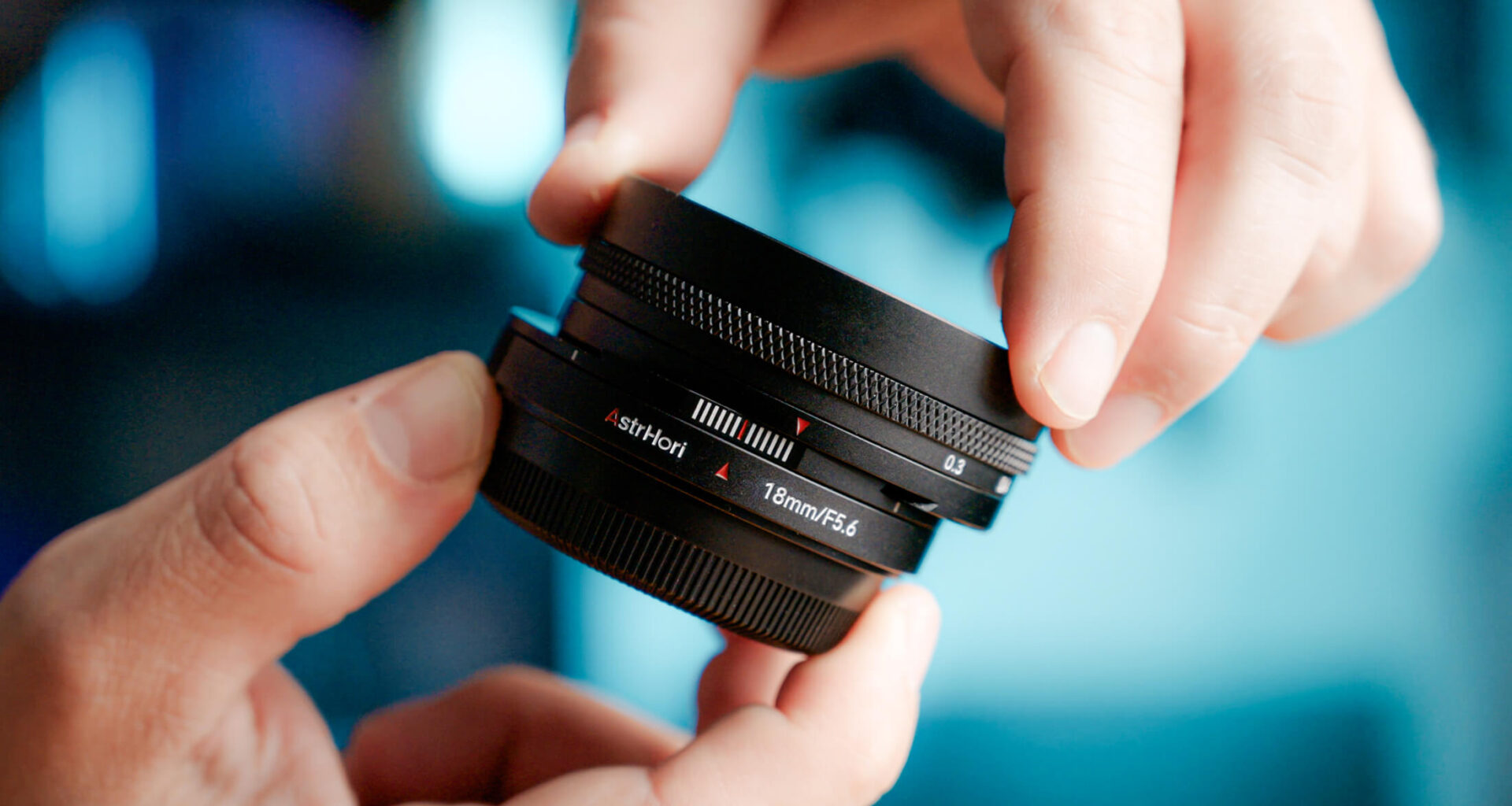

Some lenses simply look wrong at first glance. The AstrHori 18mm F5.6 Shift definitely falls into that category. It is small, flat, completely manual and the front section visibly moves from side to side. At first, it almost looks as if something is broken. But it isn’t. That is exactly what this lens is designed to do.
The AstrHori 18mm F5.6 is not a conventional pancake lens. It is a compact shift lens designed for APS-C cameras. This makes it particularly interesting for photographers who shoot architecture, want to reduce converging verticals directly in camera or simply want to find out what a shift lens can actually do.
Pergear.de provided me with the lens for testing. As always, they had no influence on this review. The article was neither coordinated nor approved beforehand, and my conclusions are based entirely on my own experience using the lens.
What is the AstrHori 18mm F5.6 Shift?
The AstrHori 18mm F5.6 Shift is a small manual wide-angle lens for APS-C cameras. It offers a fixed focal length of 18mm, a fixed aperture of f/5.6 and, of course, a shift mechanism. The aperture cannot be adjusted at all. That sounds like a fairly significant limitation at first, but in practice it is less of an issue than you might expect.
This is not supposed to be a fast lens for reportage or low-light photography. It is a specialised lens designed for architecture, straight lines, perspective correction and panoramas. In these situations, photographers will often be working with smaller apertures, a tripod and a more deliberate approach anyway. When centred, the lens can also be used just like a regular 18mm pancake lens.
What makes the AstrHori particularly interesting is its price. Shift lenses are usually anything but cheap. Traditional tilt-shift lenses can easily cost many times more. The AstrHori, on the other hand, costs roughly around €100, with an MSRP of $119. That is exactly what makes it interesting. Not because it replaces an expensive professional solution, but because it gives you an affordable way to experiment with a type of photography that would otherwise require considerably more expensive equipment.
The lens is officially available for several mounts, including Sony E, Fujifilm X, Nikon Z, L-Mount and Micro Four Thirds. I tested the Fujifilm X version.
Why Use a Shift Lens at All?
The most obvious use case is architectural photography. When photographing a building and tilting the camera upwards, vertical lines often start to converge towards the top of the frame. This is commonly referred to as converging verticals or keystone distortion. You can correct this later in Lightroom, Photoshop or other software, but doing so costs you part of the image area and can sometimes affect image quality as well.
Normal shot

A shift lens approaches the problem differently. Instead of tilting the camera upwards, you keep the camera level and shift the lens upwards. This allows you to include more of the upper part of the scene without changing the perspective by tilting the camera.
That is exactly what the AstrHori 18mm F5.6 is designed for. It cannot tilt, so you cannot angle the lens relative to the sensor plane. It only offers shift movement. For correcting converging verticals, however, that is perfectly sufficient in many situations.
Shot using the shift function

The lens can also be shifted in more than just an upward or downward direction. The entire shift mechanism can be rotated, allowing you to shift in different directions. For architecture, shifting upwards will probably be the most common use case. For panoramas, horizontal shifting becomes particularly interesting.
Build Quality and Handling
Considering how inexpensive it is, the AstrHori 18mm F5.6 feels surprisingly well made. The construction is largely metal, it feels solid in the hand and its very slim design means that it fits easily into even a small camera bag.
That is part of what makes it so appealing. A shift lens is normally something you deliberately decide to bring with you. This little lens can simply live in your backpack, ready for those occasions when you might actually need it.
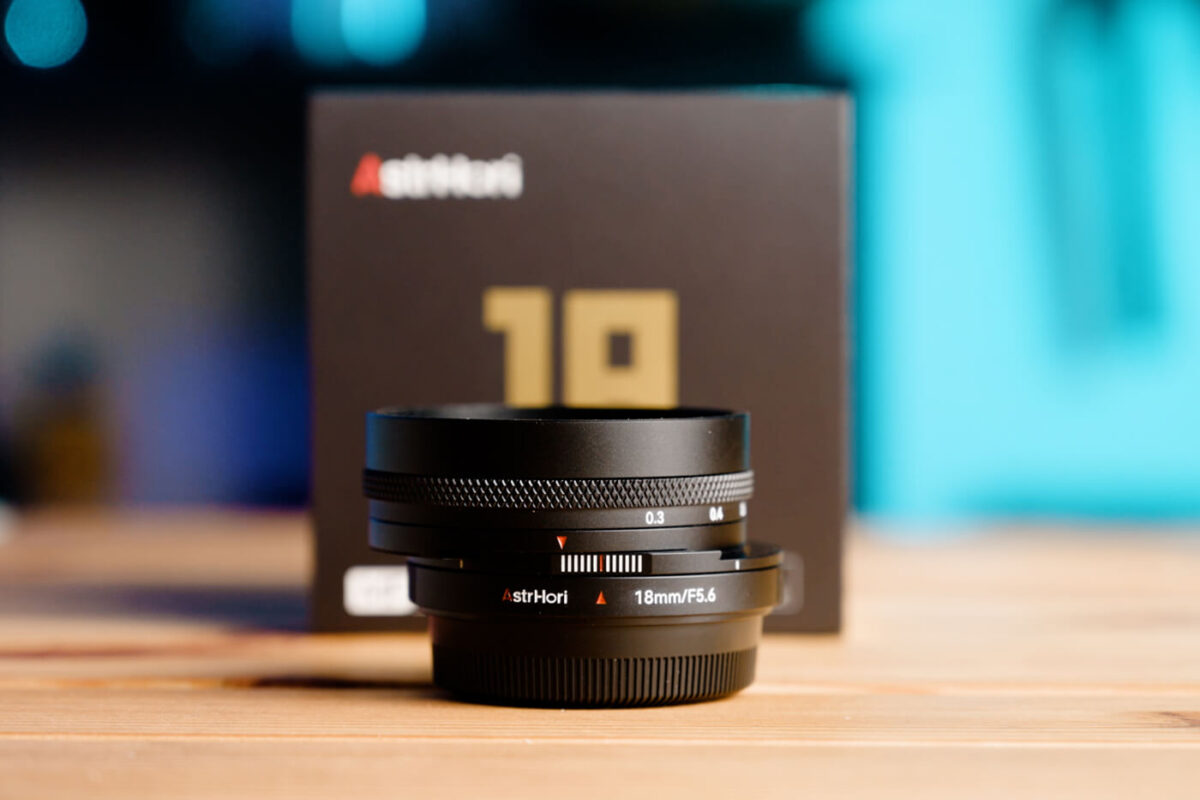
Handling is a little unusual, though. Focusing is completely manual. There is no autofocus and there are no electronic contacts between the lens and camera. You will therefore be relying on focus peaking, magnified live view or simply your own judgement.
One thing that bothered me slightly in practice is that the whole lens can rotate to change the direction of the shift mechanism. Because of this, it is possible to accidentally rotate the entire lens while focusing. Suddenly, the shift mechanism is no longer pointing in the direction you intended.

It is not a major issue, but it does mean that you have to work a little more deliberately. Quick snapshots are not exactly this lens’s greatest strength.
There is also no locking mechanism for the shift position. In theory, the front section could therefore move while the lens is sitting in your bag. I do not consider this a serious problem because the lens feels sturdy enough, but it is another reminder that this is a very affordable specialist lens. You should not expect the same handling and engineering as you would get from an expensive professional tilt-shift lens.
Image Quality in Practice
In the centre of the frame, the AstrHori 18mm F5.6 performs surprisingly well. When the lens is not shifted, images look nicely sharp. For architectural photography, the fixed f/5.6 aperture works well in many situations because you will generally want a decent amount of depth of field across the scene anyway.
Things become more interesting once you start using the shift function. Shifting the lens effectively moves the image circle across the sensor, and this is where you begin to see the limitations of such a small and inexpensive lens.
The corners become noticeably darker as you increase the amount of shift. From a technical perspective, that is understandable because the image circle of a lens in this price range obviously cannot be infinitely large. I do not consider it a deal breaker, but it is something you need to be aware of.
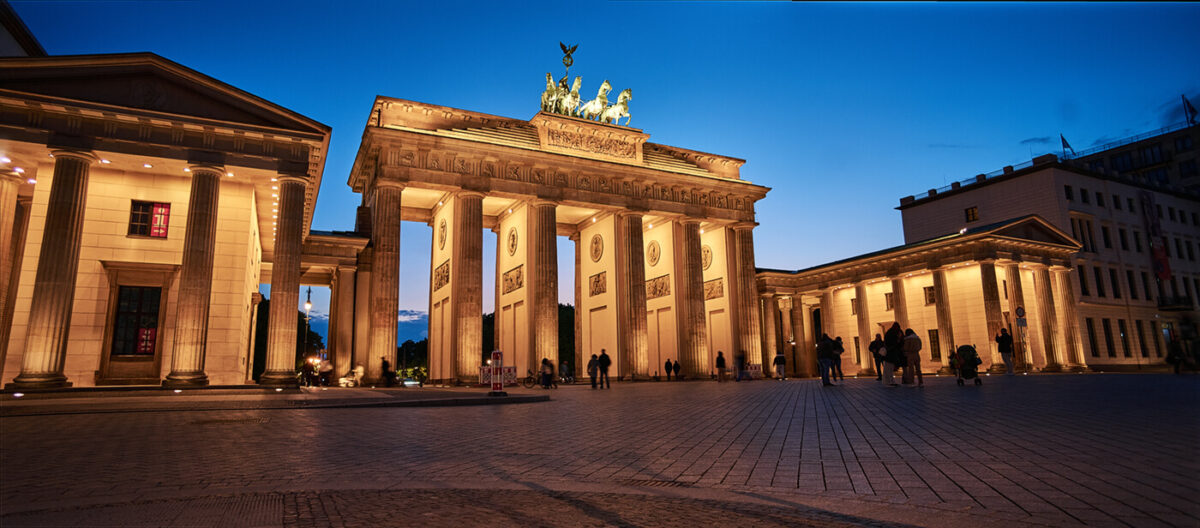
I used the lens around Berlin, including at the Brandenburg Gate. Architectural subjects make it particularly easy to see what the shift mechanism can achieve. Tilt the camera upwards and the vertical lines start converging. Keep the camera level and shift the lens upwards instead, and those lines remain noticeably straighter.
For exactly this type of photography, the little AstrHori works surprisingly well.
During blue hour, the fixed f/5.6 aperture naturally means using somewhat longer shutter speeds. I occasionally ended up between around 1/4 and 1/2 second. At that point, shooting handheld is no longer particularly practical, so the lens really belongs on a tripod for this kind of work. Anyone seriously interested in architectural photography will probably have one with them anyway.
Panoramas, Close-Up Photography and Limitations
Besides architecture, the AstrHori 18mm F5.6 Shift also works very well for panoramas. You can place the camera on a tripod, keep it level and take several images while shifting the lens. For example, you can take one image shifted to the left, one centred and another shifted to the right.
The camera itself stays in exactly the same position. Only the captured section of the image circle changes. This makes it relatively easy to stitch the resulting images together into a panorama later. During my testing, this worked well.
Close-up performance is surprisingly usable too. The minimum focusing distance is 30cm. Obviously, you should not expect extreme background blur from an 18mm f/5.6 lens, but when shooting subjects at close range, you can still achieve a small amount of subject separation. For details, small objects or creative perspectives, it can be quite useful.

There is one thing I find disappointing, however. The aperture opening is completely round, which means you do not get traditional sunstars. Especially for architecture, night photography or shooting directly into the light, I would have liked to see them.
Other compact specialist lenses have shown that angular aperture designs can produce some very interesting results. From my perspective, this feels like a missed opportunity with the AstrHori.
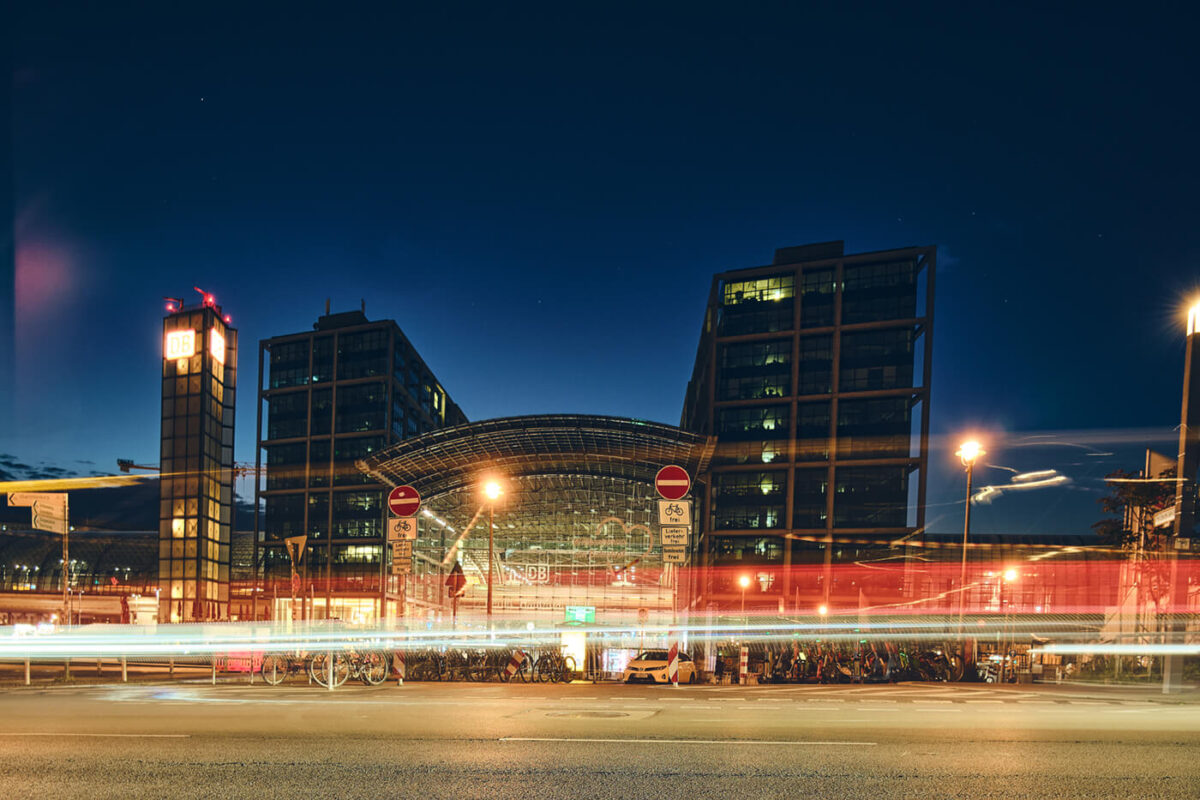
You also have to remember what kind of lens this is. It is completely manual, has a fixed aperture, no electronic communication with the camera and shows noticeable corner shading when heavily shifted.
If you are looking for perfect perspective correction, maximum corner sharpness and convenient handling, this is probably not the right lens for you. But if you simply want an affordable way to find out what shift photography is all about, it is a very interesting tool.
Who Is the AstrHori 18mm F5.6 Shift For?
The AstrHori 18mm F5.6 Shift makes the most sense for photographers interested in architecture who want to control converging verticals directly while taking the photo.
It is also worth considering if you want to experiment with shift panoramas or simply enjoy using unusual lenses.
It is less suitable for photographers who prioritise convenience. There is no autofocus. The aperture is fixed. The lens requires a slower, more deliberate way of working. And if you use a large amount of shift, you have to accept some darkening towards the edges of the frame.
For me, however, that is exactly what makes the AstrHori interesting. It does not try to be a perfect professional shift lens. It is small, inexpensive and makes an otherwise expensive specialist technique accessible to far more photographers.
And that is exactly what I like about it.
My Conclusion on the AstrHori 18mm F5.6 Shift
The AstrHori 18mm F5.6 Shift is not an everyday lens. It is not a perfect architectural lens either. But it is a surprisingly affordable entry point into shift photography.
Build quality is better than I would have expected at this price. Image quality in the centre is perfectly respectable. The shift mechanism genuinely works and can be very useful for architectural photography.
At the same time, there are obvious limitations. You get a fixed aperture, manual focus, noticeable corner shading when shifting, no shift lock and no sunstars.
Even so, my overall impression is positive. For around €100, you get a compact specialist lens that is fun to use and can genuinely expand your photographic possibilities.
Especially if you have never worked with a shift lens before, the AstrHori 18mm F5.6 is an interesting and relatively risk-free way to give the technique a try.
Without shift

With shift

Buy
AstrHori 18mm F5.6 Shift on Amazon:
https://amzn.to/4f5uL3V
AstrHori 18mm F5.6 Shift at Pergear:
https://bit.ly/4wLwjWW
Disclosure: These are affiliate links. If you purchase something through one of these links, you support my work at no additional cost to you.