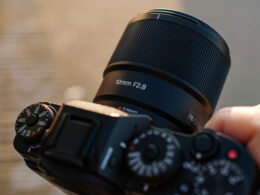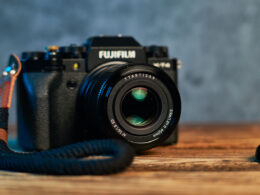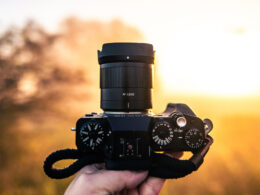
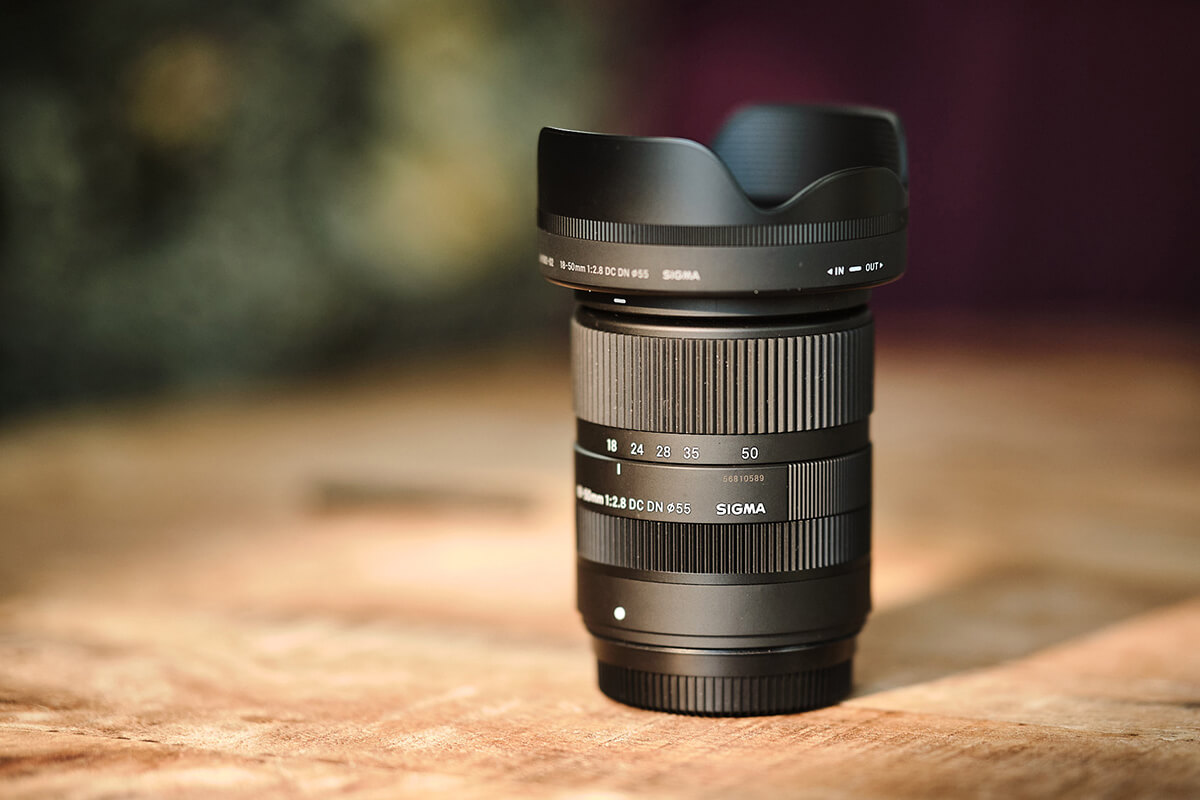


I have mostly written about prime lenses on this blog. Zooms never really appealed to me, probably because the only ones I could afford started at f/4 or f/5.6. That is not quite the look I enjoy. Still, I asked Sigma if I could take the Sigma 18-50mm f/2.8 to the Netherlands for a holiday. A fast standard zoom sounded useful for city trips when I wanted to travel light. Sigma kindly lent me the lens for the test. Many thanks to the team at Sigma Germany.
This lens was provided by Sigma for review. The opinions in this article are my own.
You can also watch my impressions in this video:
Build quality and handling
I was surprised by the lens’s dimensions. I expected it to be much larger, but it is similar in size to many kit zooms. At 285 g, it is also fairly light. The body is made of plastic rather than metal, but the material feels pleasant in the hand, even if it may scratch more easily. The rubberised zoom ring turns smoothly with a reassuring amount of resistance.
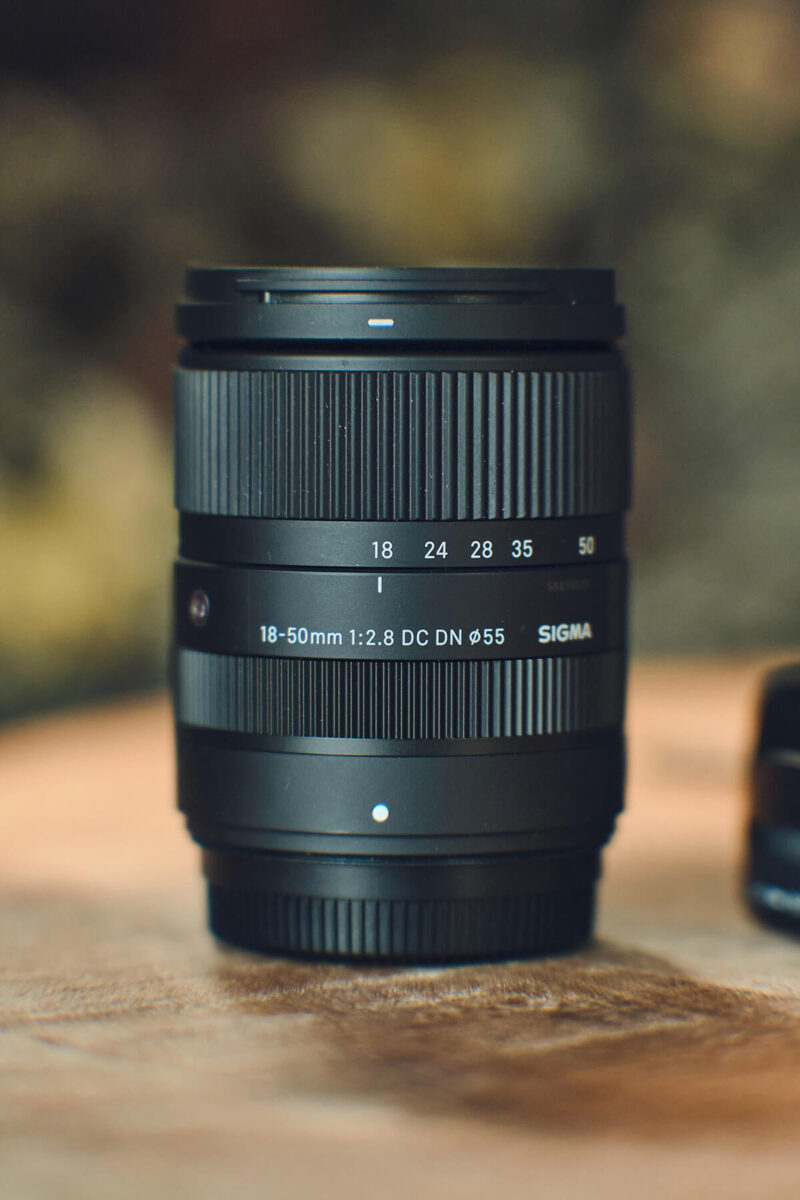
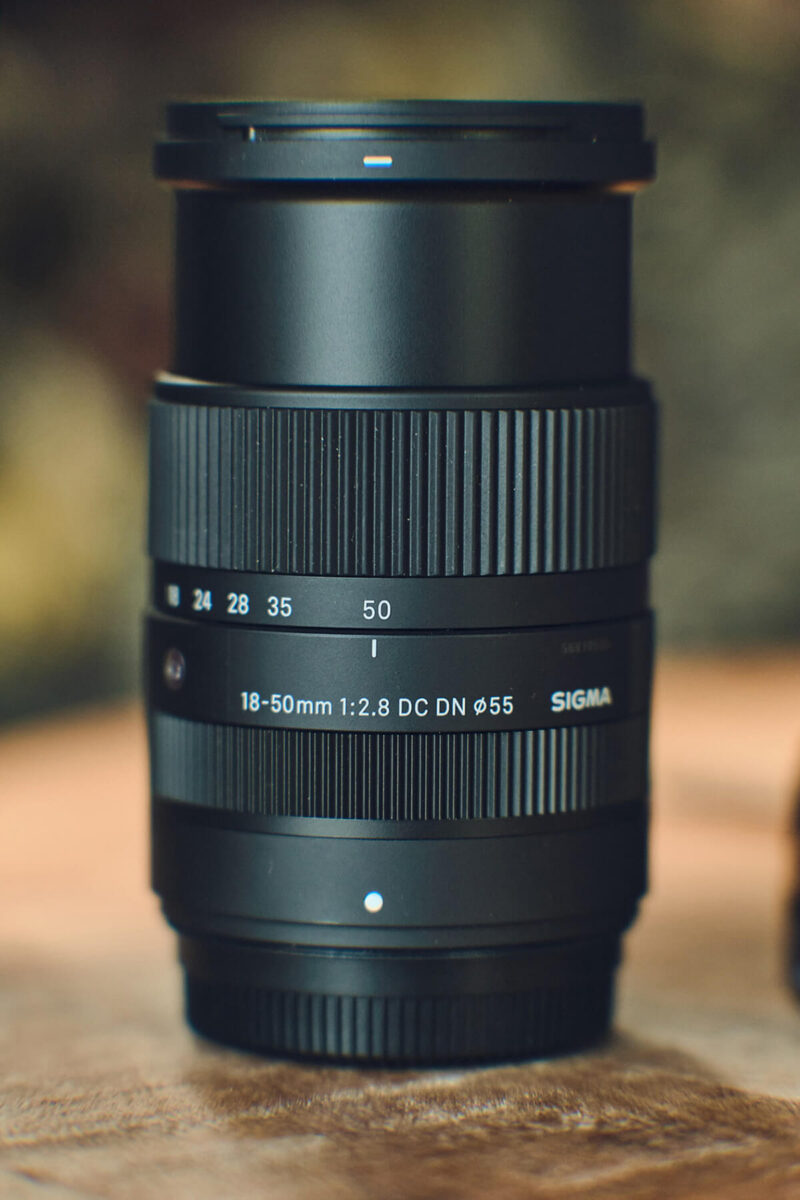
The focus ring feels a little loose, but I relied on autofocus most of the time. It was surprisingly quick and accurate. I cannot think of a situation where it let me down, even when photographing my dog playing in the sea.


In terms of looks, the matte plastic finish does not quite match Fujifilm’s stylish camera bodies. That is a minor point if the performance is right.
Image quality
Image quality is strong where it matters. Sharpness at f/2.8 is very good, and stopping down makes only a modest difference. The corners improve a little, but they are already decent wide open. This holds true at both the wide end and around 50mm.
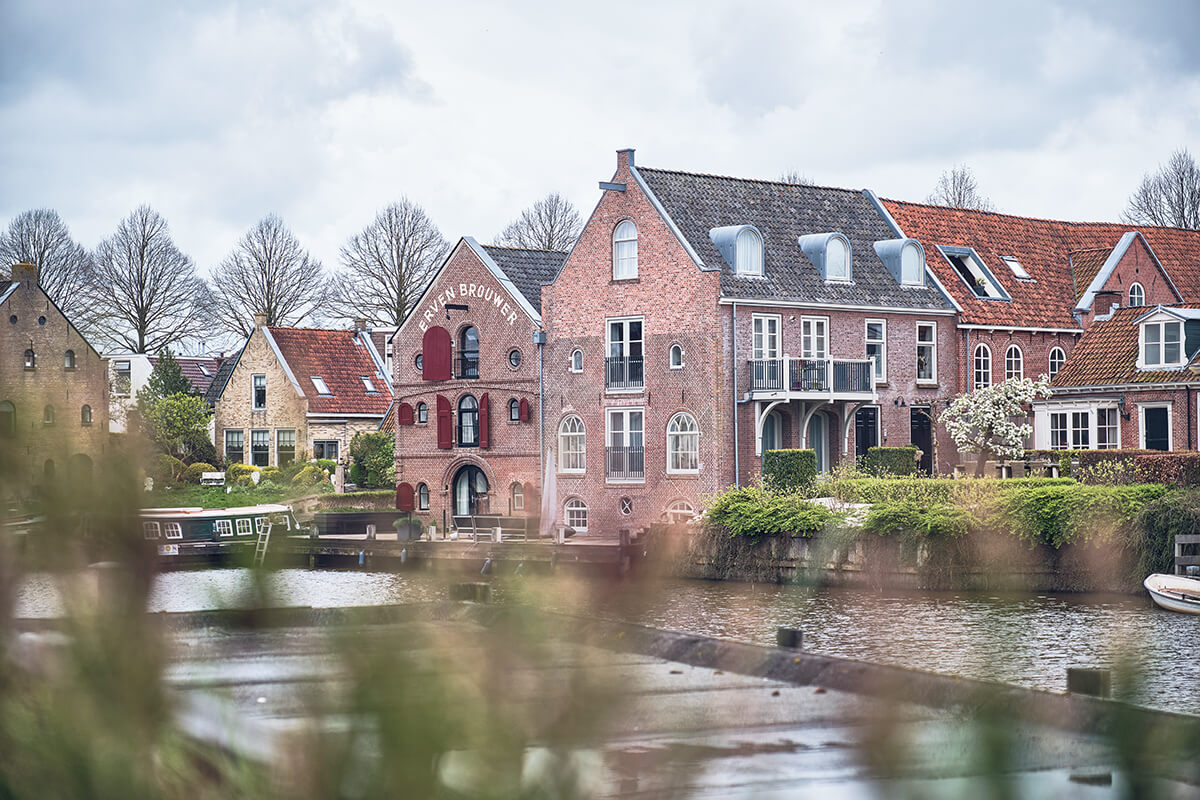

Chromatic aberrations are present but subtle. I noticed them most in an extreme situation, with direct sunlight reflecting off water, and they were easy to remove in editing. Vignetting is more obvious: at the maximum aperture the corners are noticeably darker. Stopping down to f/5.6 largely takes care of it, and it is also easy to correct in post.

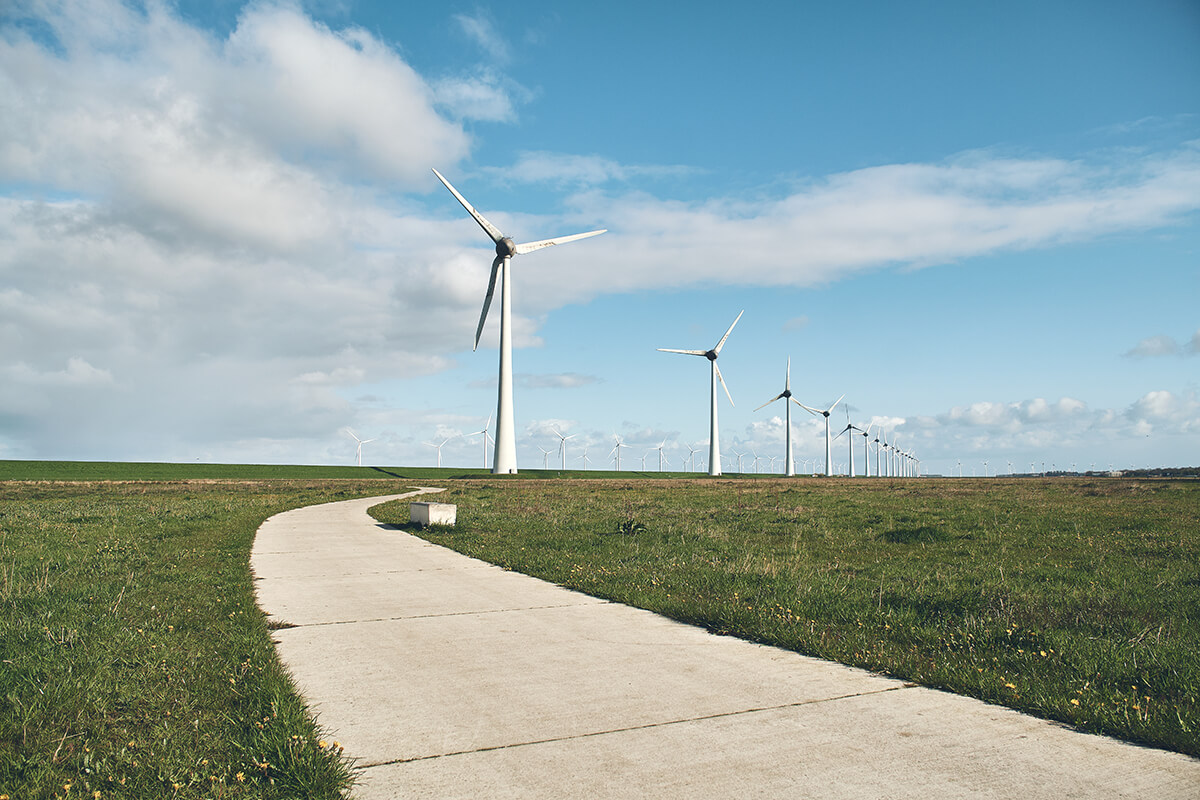
Close focusing is another plus. At the wide end, the minimum focus distance is inside the lens hood, almost right in front of the lens. Getting a subject sharp from that close can be tricky at f/2.8, but I would rather have this close-focusing ability than be unable to get near my subject.

My verdict on the Sigma 18-50mm f/2.8
Will I sell my primes and use this zoom instead? No. I still prefer working with prime lenses: I like choosing a focal length and composing around it. But I appreciated the Sigma on holiday. For a day exploring a city, I could take a small shoulder bag with this lens instead of a large backpack with three or four primes. Its bokeh is pleasant, although it cannot quite match my favourite primes.
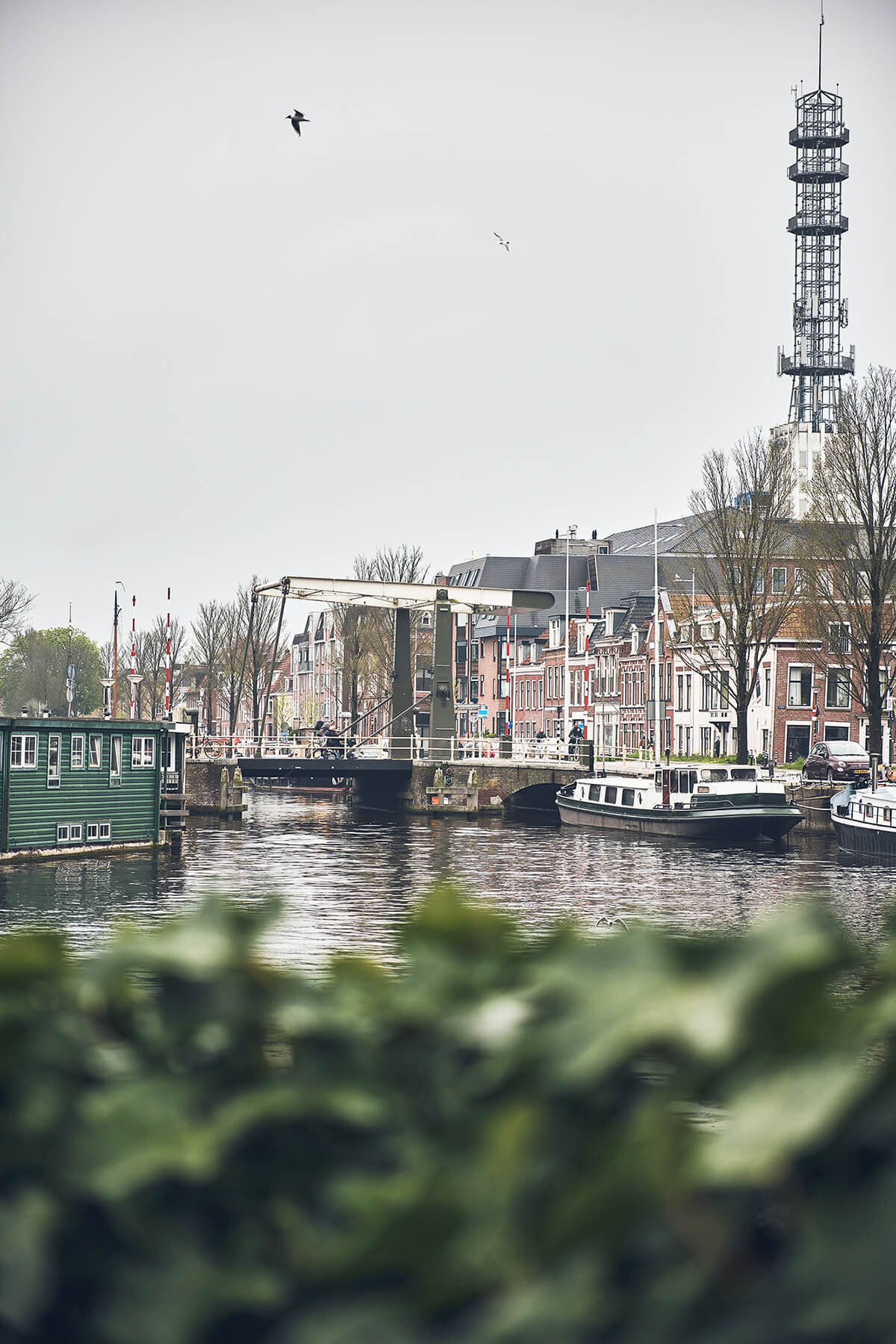
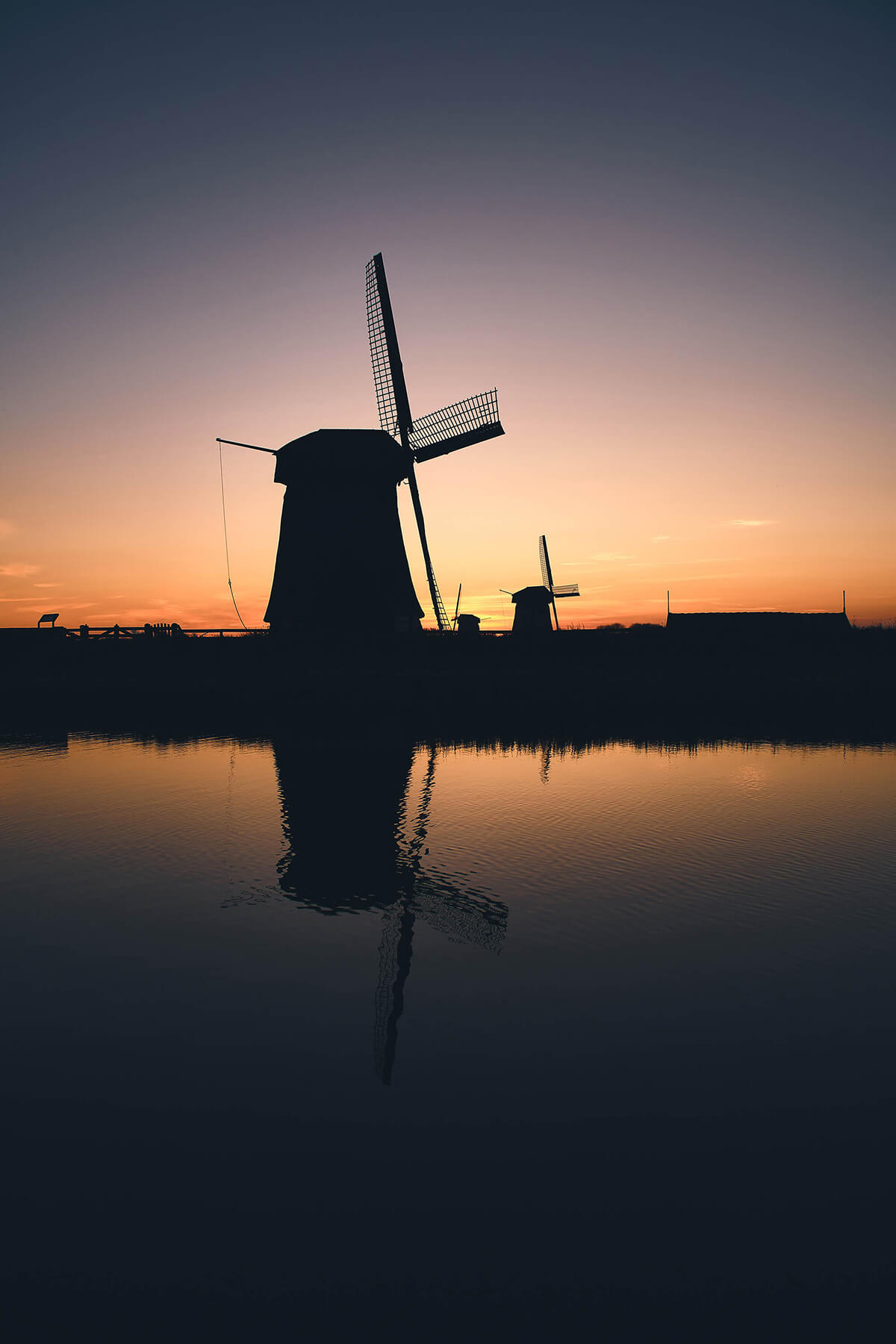
When the light was fading one evening, I was glad not to lose time changing lenses. The sunset photos of the windmills turned out beautifully, and I understand the appeal of a zoom a little better now.
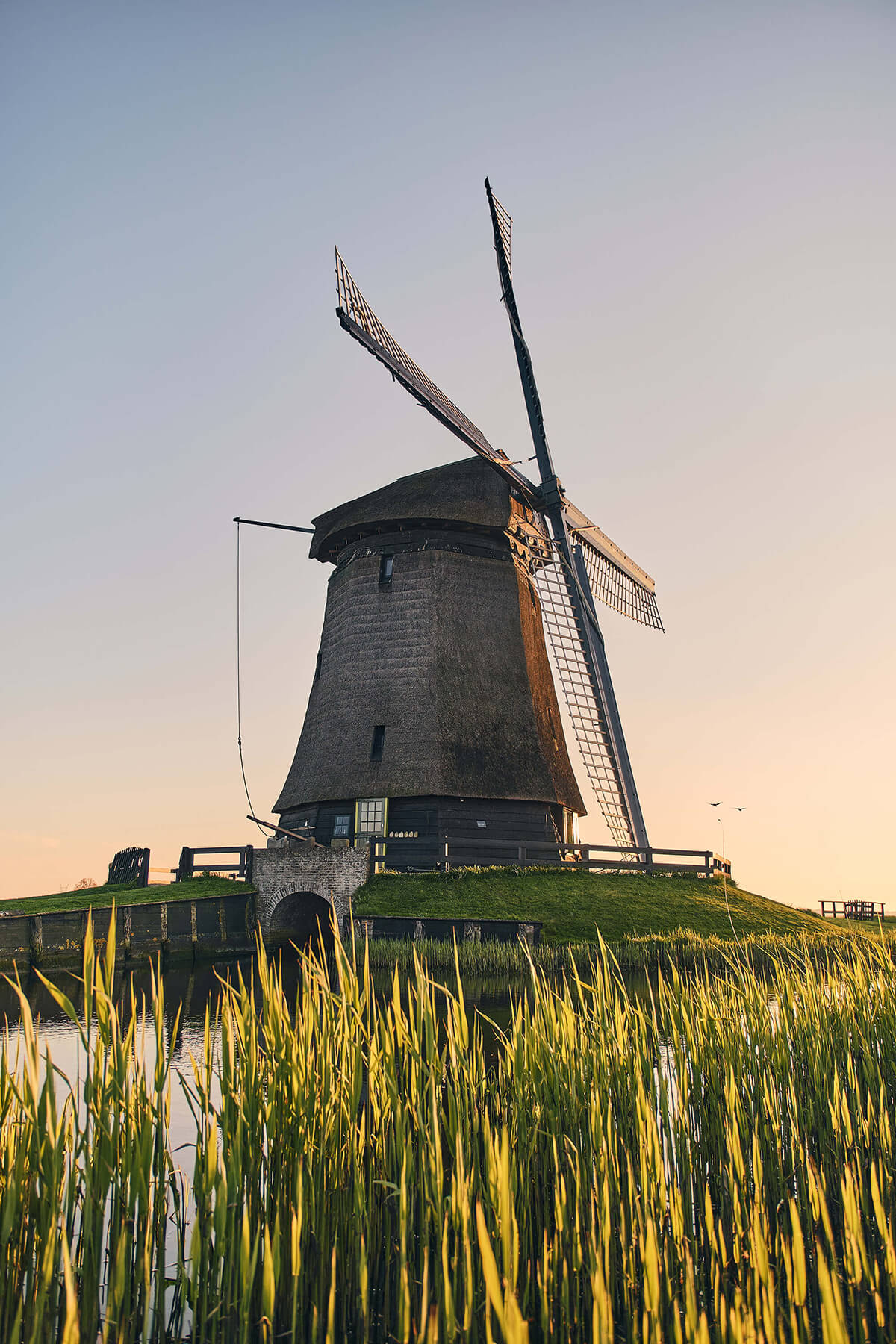
When I wrote the original review, the Sigma was priced below Fujifilm’s 18-55mm f/2.8-4, which offered a longer reach and optical stabilisation but cost more. If you want a good, bright standard zoom and are not getting the Fujifilm lens in a kit, the Sigma deserves serious consideration. Prices and availability change, so check current listings.
Mount options
I tested the Fujifilm X version. The Sigma 18-50mm f/2.8 DC DN Contemporary is also available for Sony E, Canon RF and L-Mount. It is designed for APS-C sensors; my experience and sample photos here are from Fujifilm X.
Affiliate disclosure: Some links are affiliate links. If you buy through them, I may earn a commission at no extra cost to you. The review lens was provided by Sigma.