



This is the English version of my comparison of the Fujifilm X-T2, X-H1 and X-T3 in German.
If I were buying a used Fujifilm camera today, three older models would be on my shortlist: the X-T2, the X-H1 and the X-T3. All three are now much more affordable than current Fujifilm bodies. However, they feel quite different in use and suit different kinds of photography.
I know the X-T3 as a reliable workhorse that I still really enjoy shooting with. I also used the X-H1 for several weeks, including at a wedding. And I have shot paid assignments with the X-T2, too. I had a lot of fun using it, and it still feels very much like a Fujifilm camera to me.
Disclosure: The links to MPB are affiliate links. If you buy a camera through one of them, I may earn a commission at no extra cost to you. Used prices and availability can change at any time.
Fujifilm X-T2 vs X-H1 vs X-T3: specifications compared
| Specification | Fujifilm X-T2 | Fujifilm X-H1 | Fujifilm X-T3 |
|---|---|---|---|
| Sensor / resolution | APS-C, X-Trans CMOS III 24.3 megapixels |
APS-C, X-Trans CMOS III 24.3 megapixels |
APS-C, X-Trans CMOS 4 26.1 megapixels |
| Maximum video | 4K/UHD up to 30p Full HD up to 60p |
4K/UHD up to 30p Full HD up to 120p (high speed) |
4K/UHD up to 60p Full HD up to 120p (high speed) |
| Battery / CIPA rating | NP-W126S Approx. 340 shots |
NP-W126S Approx. 310 shots |
NP-W126S Approx. 390 shots |
| In-body image stabilization | No | Yes, 5-axis, up to 5.5 stops* | No |
| Dimensions (W × H × D) | 132.5 × 91.8 × 49.2 mm | 139.8 × 97.3 × 85.5 mm | 132.5 × 92.8 × 58.8 mm |
| Weight with battery and card | Approx. 507 g | Approx. 673 g | Approx. 539 g |
| Fastest continuous shooting | Up to 14 fps electronic 8 fps mechanical (11 fps with battery grip) |
Up to 14 fps electronic 8 fps mechanical (11 fps with battery grip) |
Up to 30 fps electronic with 1.25× crop Up to 20 fps electronic without crop 11 fps mechanical |
| Shutter speed in S/M mode | Mechanical: 15 min to 1/8,000 sec Electronic: up to 1/32,000 sec |
Mechanical: 15 min to 1/8,000 sec Electronic: up to 1/32,000 sec |
Mechanical: 15 min to 1/8,000 sec Electronic: up to 1/32,000 sec |
| Bulb | Mechanical: up to 60 min | Mechanical: up to 60 min | Mechanical: up to 60 min |
| Viewfinder | OLED, approx. 2.36 million dots | OLED, approx. 3.69 million dots | OLED, approx. 3.69 million dots |
| Rear screen | 3-inch, three-way tilting | 3-inch, touchscreen, three-way tilting | 3-inch, touchscreen, three-way tilting |
Specifications are based on information from Fujifilm for the X-T2, the X-H1 and the X-T3. CIPA battery figures are comparison figures measured in standard mode. Real-world battery life depends on factors such as temperature, screen and viewfinder use, and image stabilization. The X-T3’s 30 fps rate uses a 1.25× crop, so not all burst rates are directly comparable. The X-T2 supports a 15-minute shutter speed in S/M mode with current firmware.
* Fujifilm specifies up to 5.5 stops of stabilization under defined test conditions and with the XF 35mm F1.4 R.
The X-H1 arrived between the X-T2 and X-T3, but technically it is closer to the X-T2. Both use a 24.3-megapixel X-Trans CMOS III sensor. The X-T3 moved to the newer 26.1-megapixel X-Trans CMOS 4 generation. That explains part of its advantage in autofocus and video, although it does not tell you which camera will feel better in your hands.
Fujifilm X-T2: the affordable camera with classic controls
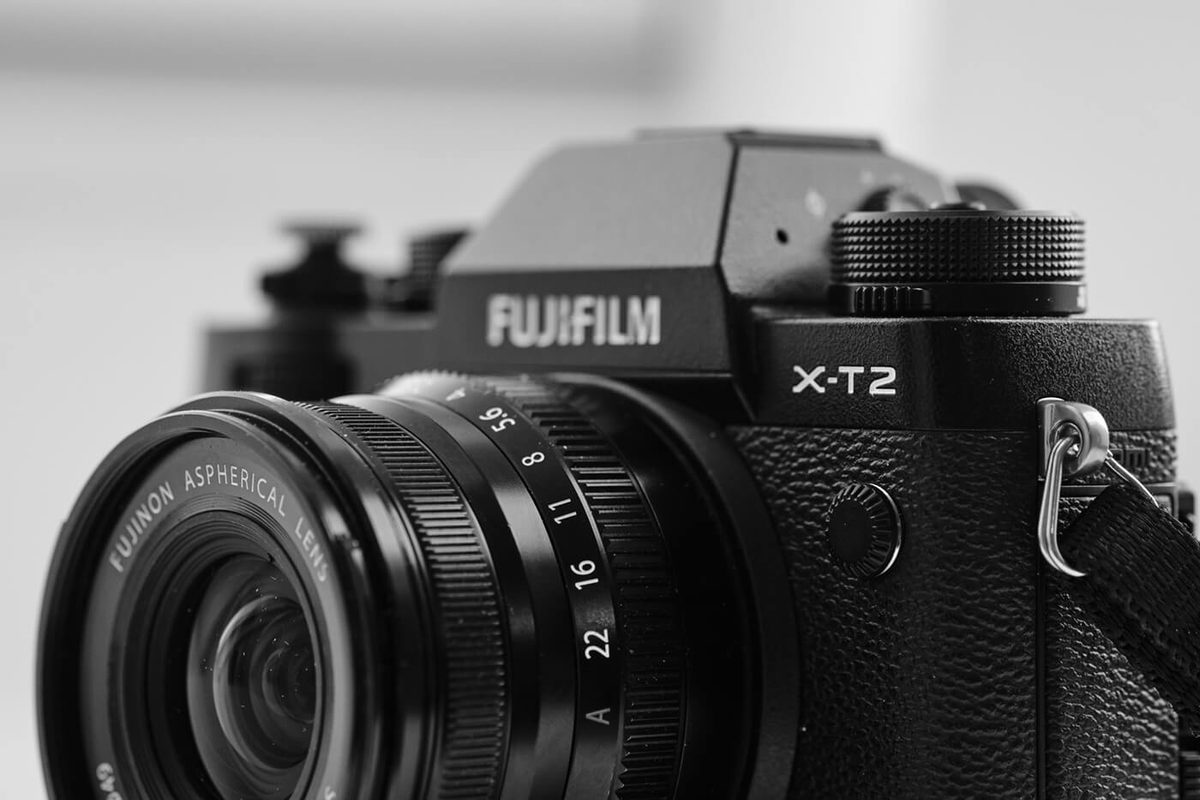
What I particularly like about the X-T2 is how straightforward it is to use. It feels good in the hand, the physical dials are fun to work with, and the screen tilts in three directions. That is especially useful when shooting close to the ground or from waist level. It also has many features that remain useful today.
Its 24.3 megapixels are enough resolution for most of the assignments I shoot. The classic controls, with separate dials for ISO and shutter speed, are another part of the camera’s appeal for me. It has that Fujifilm feel without requiring you to buy a current model.
The biggest compromises show up in the feature set. The X-T2 has no in-body image stabilization. That matters less when you use stabilized lenses, but with unstabilized primes or adapted manual lenses, you lose the extra help from the camera body. Its autofocus and video features are also older than those of the X-T3.
If price matters and you mainly take still photos, I would seriously consider the X-T2. It offers a lot of what I like about Fujifilm. The X-T3 is a little faster, though, has better autofocus and lasts longer on a charge. That extra battery life is particularly useful for long assignments.
Fujifilm X-H1: a large grip with Fujifilm’s classic dials
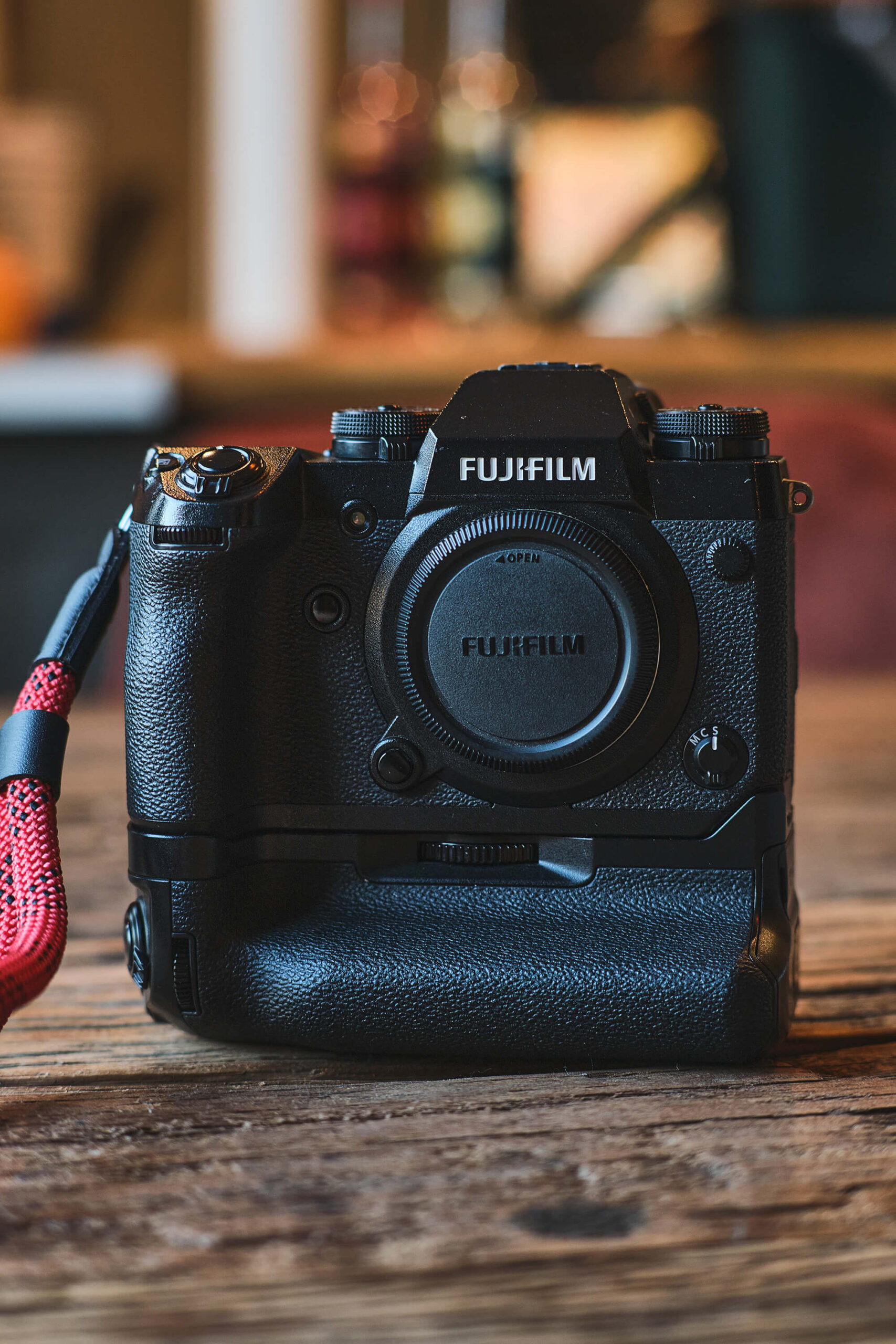
I found the X-H1 interesting even back then because its shape is closer to a DSLR: it has a larger grip, more volume and a top-plate status display. At the same time, it does not feel like a typical camera with a mode dial. Fujifilm kept the separate dials for ISO and shutter speed. That combination is still unusual in the X system.
Its main advantage is the built-in 5-axis image stabilization. IBIS can make a real difference with static subjects, in low light or when using manual lenses. With moving subjects, however, it cannot replace a fast shutter speed or freeze motion.
I was impressed by how steady the viewfinder image became when I first switched on the stabilization. In everyday use, though, the camera did not suit me as well as the X-T3. The grip felt very large in my hands, the body was noticeably heavier and I had less confidence in the battery life. I also found the X-T3’s autofocus more reliable when things were moving quickly. Those are my personal impressions, of course, not universal flaws. If you prefer a substantial grip and often use unstabilized lenses, the X-H1 may suit you precisely for those reasons.
The X-H1 is not simply a “better X-T2.” Instead, it is the specialist in this comparison: stabilized, comfortable to hold with larger lenses and built for photographers who like a more substantial grip. You should still try the body in your own hands before buying it.
More about the camera: My detailed Fujifilm X-H1 experience report (in German).

Fujifilm X-T3: my workhorse and the most balanced choice
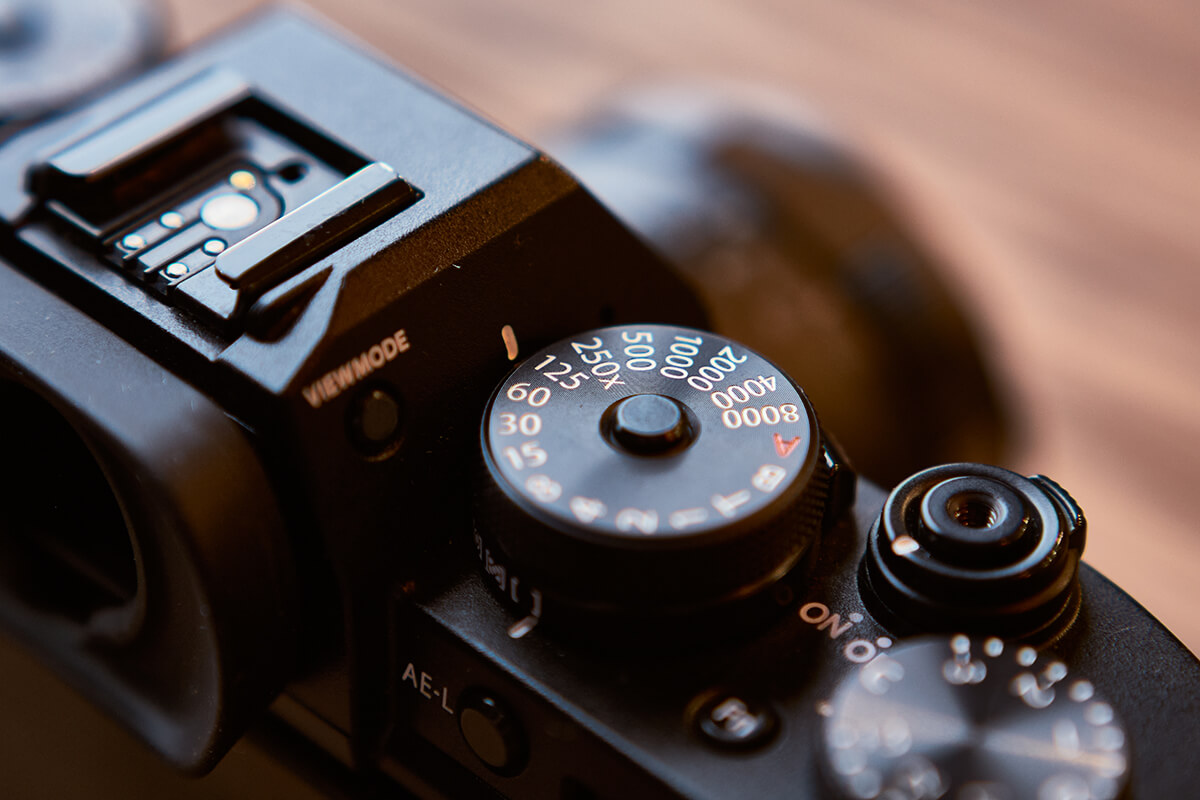
The X-T3 is my recommendation if you want a fast, versatile camera that can handle a wide range of jobs. It has 26.1 megapixels, a newer sensor and noticeably more modern autofocus than the X-T2 and X-H1. You also get two SD card slots and strong video features. For reportage, weddings, wildlife, everyday photography and video, it is the most well-rounded of the three.
What it does not have is IBIS. A stabilized lens can make up for that; with unstabilized lenses, you need to keep an eye on shutter speed and ISO yourself. For me, that is a fair compromise in everyday use. The X-T3 remains a reliable workhorse and a camera I really enjoy shooting with.
More about the camera: My detailed Fujifilm X-T3 experience report with personal impressions and sample photos (in German).

Which used Fujifilm camera would I buy?
- I would choose the X-T2 if price matters most, you mainly shoot stills and you want classic Fujifilm controls. It is the simple, affordable option.
- I would choose the X-H1 if IBIS and the larger grip are real advantages for you. It is especially interesting with unstabilized lenses and static subjects. Try it in your hands first.
- I would choose the X-T3 if you want a dependable camera for a wide range of work. Its newer autofocus, higher resolution and stronger video features make it the best all-rounder for me.
My personal winner is still the X-T3. I would not dismiss the X-H1 too quickly, though: if its ergonomics work for you and you want IBIS, it gives you a distinctive body with Fujifilm’s classic controls. And if you want to get into the system as cheaply as possible, the X-T2 still offers a lot of camera for the money.
When buying used, check the condition of the screen and dials, make sure every button works, inspect the sensor for visible damage and look at the condition of the batteries. With older bodies, overall condition is often more important than saving a small amount of money.
If you are looking for more ideas for an affordable Fujifilm setup, my article Landscape Photography for €1,000: Four Camera Setups I Would Buy Today (in German) also includes my thoughts on the X-T2.